
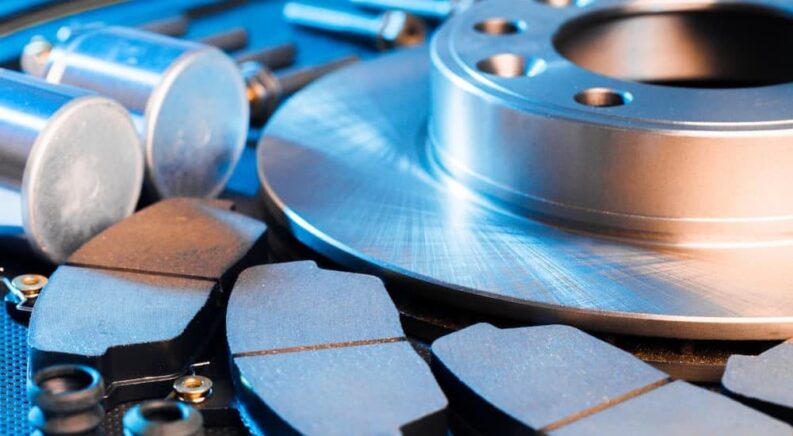
I’ve done my fair share of brake jobs, and I’ve seen just about every scenario you can think of. I’ve seen rotors worn down to the fins, brake pads installed backward or missing altogether, you name it. Something that always sets off alarm bells is when I inspect a set of pads and find that one is in need of replacement, while the other looks nearly untouched. This is always a reason to dig deeper. It’s not a simple cosmetic problem or an issue of cheap parts. It’s a symptom of something else going awry in the braking system, and something that needs repair.
Let’s walk through some of the causes for uneven brake wear, what it is, how it happens, and how to diagnose and correct the issue. These things are universal, whether you’re maintaining your daily driver, preparing for the track, or looking for that squealing sound you’ve been putting up with for weeks.
Seized Guide Pins
One of the most common culprits, and one that’s made me question my sanity more than once, is when the caliper can’t move freely due to the guide pins binding (also called slide pins). The caliper is supposed to “float” a little so that both pads clamp evenly on the rotor when the brakes are applied. If one side gets stuck, it’s a recipe for uneven wear.
In my experience, when a pin is corroded, dirty, or has a torn rubber boot, the caliper will hang up. Most often, you’ll see the inner pad closest to the piston wears much faster than the outer, which will likely be almost new. The rotor will get a hot spot on that side, and in severe cases, you’ll probably feel the drag.
To check and fix this, lift the car, remove the wheel, unbolt and slide the caliper off, and remove the pins. Clean the pins and bracket holes thoroughly. Inspect for pitting or corrosion. Grease with high-temperature brake grease and install new boots. Check that the caliper slides freely from side to side once reinstalled. If it’s still sticking, you may need to invest in a new caliper or a rebuild kit. This fix is often “DIY-friendly” and fixes a lot of uneven wear cases.
Sticking Piston or Collapsed Hose
Beyond the slide pins, the caliper piston itself can be a significant issue, and so can the brake hose that feeds it. When either of these fails to release fully, the pad drags against the rotor constantly and wears more rapidly on one side.
To catch it, check the wheel temperatures right after driving the car. One side being significantly hotter may be a sign of dragging. With the wheel off, remove the caliper, and see if the piston moves freely in and out. Inspect the flexible hose. Is it swollen, cracked, or collapsed? This sometimes shows as dark fluid discoloration or hose expansion under pressure. When you compress the piston (with the brake pedal pressed and released), does the caliper float back properly, or does it stay tight? If the piston is bound or the hose is collapsed, replacing the caliper or hose is usually the next step, followed by bleeding or flushing the system.
Warped Rotor
We typically think that pads wear unevenly because of the pad, but sometimes the brake rotor is at the root of the issue. If a rotor has some kind of thickness variation or is warped badly enough, the pad may have uneven contact. This can cause uneven heating, which will further exaggerate the wear.
Always measure rotor thickness at multiple points with a micrometer or caliper. Compare both sides and faces. Feel for a “waviness,” also known as run-out, by removing the caliper and spinning the rotor while using a dial indicator. If any thickness variation is found, even as little as 0.17mm according to some factory specs, replace or machine the rotor. After installing new pads and a new rotor, properly seat the pads so that the surfaces mate correctly.
Caliper Misalignment or Improper Installation
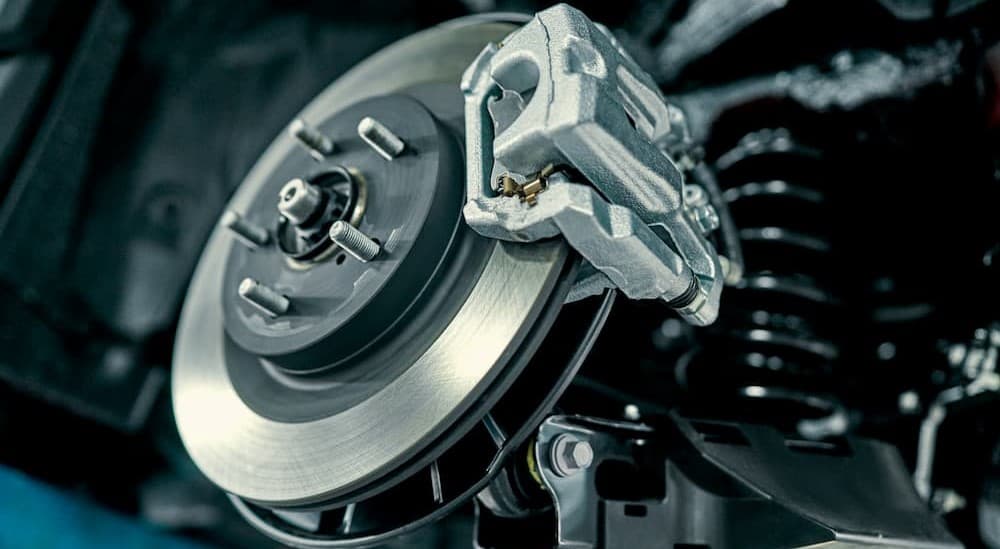
One of the less common causes, but definitely something worth considering, is caliper misalignment or improper installation. If the caliper is not mounted squarely because a bracket is bent or bolts were left loose, it can cause uneven wear and some absolutely abhorrent noises. Human error can also play a part here if pads are installed backwards (something I’ve seen more than once) or if incorrect hardware is used. These problems tend to wear the pad into a tapered or “wedge” shape rather than uniform wear.
Verify that the caliper mounting bolts are tightened to the specified torque. Check the caliper bracket for bends or damage, especially if the vehicle took a hit or a curb strike. Verify the correct pad orientation. Some pad sets have different inner and outer hardware, particularly on multi-piston setups. During reinstallation, clean the bracket ears, apply brake grease to the pad shims/hardware, and ensure that the pads are fully bedded.
Poor Pad Quality
Another possibility I’ve seen is cheap or mismatched pads. This is rarely the cause, but it is definitely possible. If someone has put ceramic pads on one side and semi-metallic pads on the other, it could cause uneven wear simply because the materials behave differently under heat, load, and friction. Poor quality pads may also have inconsistent density or backing plate warping that leads to higher contact pressures in certain spots, causing faster wear.
To avoid this, always replace pads on both sides of the same axle together, and ideally, the same brand and type. When you change pad material, ensure rotor compatibility and proper break-in for the new pad surface. Inspect the old pads. If one looks glazed or has uneven thickness internally, that may indicate a pad material issue.
Driving Style and Usage Patterns
This is based more on driver behavior than mechanical failure, but how you drive can have an effect on how evenly your brake pads wear. If you’re carrying a lot of heavy loads, have larger than OE wheels and tires, drive aggressively with hard braking, or see frequent stop-and-go traffic, the side of the caliper doing more “work” may wear the pad more quickly. A brake system that’s already compromised by one of the other issues we’ve discussed will only amplify the effect on the pad.
When you rotate your tires, inspect your brakes and pay close attention to wear pattern differences from right to left. Ensure your brake fluid is fresh. Old fluid can lead to corrosion and binding. If your vehicle has a tendency to pull to one side during braking, or you frequently brake heavily on one corner, consider larger, higher quality pads, or upgrading components to balance the load.
Diagnostics
When I discover an uneven pad set, here’s how I generally walk through it to find the issue.
-
- Visual Inspection: Remove the wheel and, if necessary, the caliper and note the difference in pad thickness between left vs right and inner vs outer. Look for evidence of tapering, hot spots on the rotor, or shiny glazed pad surfaces.
- Check Slide Pins: Remove and grease the pins, clean and inspect the boots. Ensure the caliper moves smoothly. If the pins are seized or heavily corroded, the problem likely lies there.
- Check Piston/Hose: After a test drive, compare wheel temperatures. Free up the caliper and depress the pedal. Does the piston retract? Is the hose condition acceptable?
- Measure Rotor: Use a caliper or micrometer to measure the rotor’s thickness at multiple points. Check for run-out or waviness. If the variation is beyond specification, machine or replace the rotor and pads.
- Check Hardware and Installation: Was the caliper bracket mounted correctly? Were all of the bolts accounted for and tight? Were the pads oriented correctly? Are there any signs of damage or improper hardware?
- Pad Material Check: Are the pads mismatched? Is the rotor compatible? What is the pad quality like?
- Driving Environment/Habits/Conditions: Consider whether or not the vehicle consistently sees more of a load on one side or the other, or if the brakes see repeated stress. Adjust maintenance intervals accordingly.
Once I identify the root cause, I typically replace the pads, reinstall cleaned or new hardware, machine or replace the rotor, seat the brakes properly, and then monitor the condition at the next service interval. The ultimate goal is to achieve symmetric wear on both pads.
Real World Example
My own project car had sat for more than a decade, so when I finally got down to it, brakes were a must. When I pulled the rear caliper, I found that the inner pad was almost down to bare metal while the outer pad had quite a bit of meat left on it. The pins were so seized that I had to use vice grips to get them out. The boots were dry-rotted, and the rotors were shot. Luckil,y I was able to clean the pins and bracket so that the caliper could move freely. After replacing the boots and hardware, my brakes were as good as new.
If you’re tooling around with your own vehicle and you notice uneven brake wear, don’t rush to assume that it’s just cheap pads. Uneven wear is not the problem, but a symptom of a bigger issue. It ultimately means that something in the system isn’t allowing the pads to do their job evenly.
You could try pad-slapping it and hoping for the best, but you’ll likely be back to square one in no time flat. Fix the root cause: slide pins, calipers, bad rotors, faulty hardware, or a bad brake line. That’s how you achieve a longer service life, better braking performance, and most importantly, a safer driving experience.
Of course, in the heart of DIY, always keep safety in mind. When you jack up the car and remove the wheels, always make sure that the vehicle is securely supported. When you’re dealing with brake fluid or other brake components, make sure you’re using gloves and eye protection. This stuff is nasty. After any brake work, always verify pedal firmness, proper pad break-in, and make sure there are no leaks in the system.
Full Stop
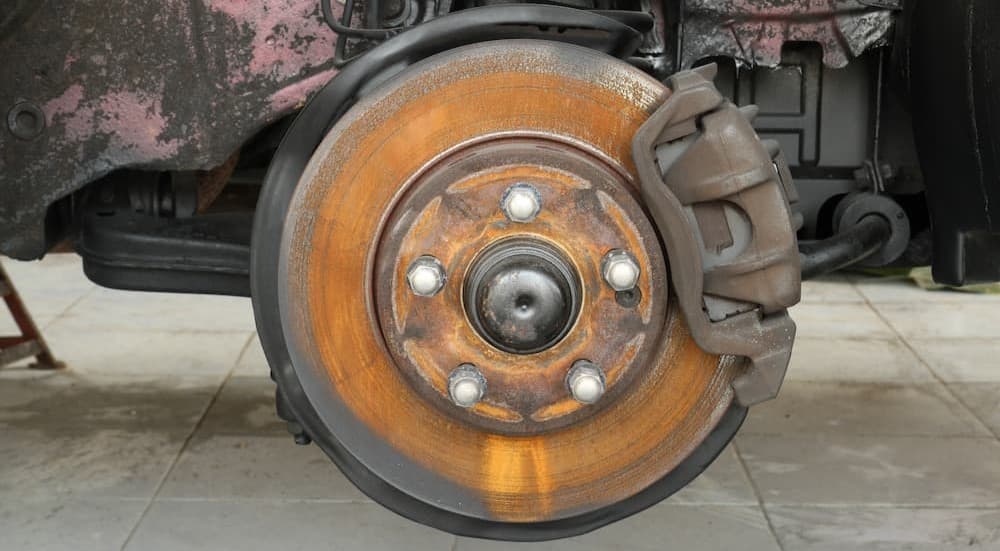
Uneven brake wear is more than just an inconvenience. It’s the system’s way of telling you that something is out of balance. Whether it’s seized slide pins, a stuck caliper piston, a collapsed brake hose, or one of the many other potential issues, something is causing your pads to wear that way.
The good news for the DIYer is that you can catch and fix the issue. With the right inspection sequence, thorough cleaning and greasing of hardware, accurate rotor measurement, proper pad selection, and attention to installation details, you can restore symmetrical wear and regain the confidence that both sides are working in harmony. The next time you pull a pad and notice one side is worn while the other “still looks fine,” don’t shrug it off. Dig in. Your future self (and your rotors, pads, and wallet) will thank you. After all, even braking should be balanced.