
Walk into a local parts house, or scroll any online marketplace, and it won’t take you long to stumble across droves of interior accessories that promise to improve your driving experience. Some come bearing the gift of comfort. Others offer convenience and organization. On occasion, you may see them claiming to improve safety.
I like an interior personally tailored to me as much as anyone else. I’ve added phone mounts, seat organizers, and better floor mats to several of my vehicles over the years, but I’ve noticed some troubling trends. A surprising number of these popular accessories can actually make your car considerably less safe, not more. Some interfere with SRS systems, either hindering components from working as designed or even becoming projectiles in a crash. A few can even prevent you from properly controlling the vehicle.
Most of these products are perfectly legal and readily available at your local stores. Many are marketed as harmless upgrades. But modern vehicles are engineered with precise airbag deployment paths, carefully laid-out sight lines, and tightly regulated controls, so even the smallest additions can introduce a risk. Here are just a handful of accessories that I’ve learned to approach with caution.
Loose Grips Sink Ships
Steering wheel covers are everywhere, and when they fit correctly, they can improve grip, comfort, and style. But poorly fitted covers can be a real hazard. If a steering wheel cover is loose, it can shift while you’re turning the wheel. The movement may seem minor, but in the middle of an emergency maneuver, it can radically throw off your control of the car. Another glaring issue is low-quality materials. Some of the more inexpensive covers use glossy plastics or thin vinyl that can become slippery when your hands are sweaty or when your interior gets hot.
A steering wheel is your primary control of the vehicle, so anything that could potentially interfere with it deserves careful consideration. If you’re going to use a steering wheel cover, it should fit tightly and be designed to fit your specific wheel size. If it moves even the slightest bit while driving, it’s not safe to continue using.
A Cluttered Dashboard Can Become a Claymore
This one could be considered a hot take in some circles, but dashboard decorations are a surprisingly big problem in collisions. Small figurines, decorative stones, or adhesive-mounted gadgets may seem harmless, but during a crash, they have the potential to turn into high-speed projectiles. Even a minor accident can generate an incredible amount of force. Objects sitting loosely on the dashboard can be catapulted directly toward the driver or passengers.
I’ve also seen cases where these items interfere with airbag deployment. Most passenger airbags deploy upward from the dashboard. If something is sitting in its path, it can be violently thrown when the airbag inflates. The safest dashboard is a clear dashboard. If something isn’t firmly mounted and designed to stay in place during a collision, it doesn’t belong there.

Out Of Sight, Not Out Of Mind
Phone mounts are an accessory that I use myself, but placement matters more than most people realize. A poorly positioned mount can block your field of vision, interfere with airbag deployment, or simply pull your attention away from the road. Mounts placed in the center of the windshield often fall directly in the driver’s line of sight. Even if the obstruction seems small, it can hide pedestrians, cyclists, or even vehicles approaching from certain angles. Another issue is vent-mounted phone holders. These can block airflow, but more importantly, they sometimes sit in the deployment paths of the passenger airbag.
A safer solution is a low-profile mount placed just outside of the primary field of vision, such as a lower corner of the dashboard, where it isn’t in the way of your view of the road. The goal should be quick glances, not something that encourages you to stare at your phone while driving. These are for navigation, not Netflix.
Clipping Corners
Seat belt adjusters are marketed as comfort devices. They promise to stop the belt from rubbing your neck or shoulder. The problem here is that many of these devices alter how the seat belt works in a collision. Seat belts are carefully engineered to distribute force across the strongest portions of your body: your chest, shoulder, and pelvis. When you add a clip or adjuster that changes the belt’s angle, you may be interfering with that design and risking serious harm.
Some clips even prevent the belt from tightening properly during sudden deceleration. In a crash, that slack can allow your body to move farther forward before the belt stops you, increasing your risk of injury. If a seat belt feels uncomfortable, adjusting the seat height or belt anchor point, if the vehicle allows, is usually a safer fix than installing an aftermarket clip.
Undercover Safety
Seat covers are incredibly popular for protecting upholstery, especially in vehicles used for work, kids, or outdoor activities. However, not all seat covers are created equal. Many modern vehicles have side-impact airbags built into the seat bolsters. These airbags deploy through special seams in the fabric during a collision. If a seat cover isn’t designed to properly accommodate those airbags, it can delay or block deployment entirely.
Some manufacturers make airbag-compatible seat covers, but generic universal covers may not be. If your vehicle has seat-mounted airbags, it’s important to use covers specifically labeled as airbag-compatible. Otherwise, you may be compromising one of the vehicle’s most important safety features.

Weighing Down More Than Your Pocket
Many drivers carry large bundles of keys, decorative keychains, or other accessories on their keyrings. While it may seem harmless, a heavy keychain can put excess strain on the ignition switch. Over time, the weight can wear internal components, potentially causing the ignition to slip out of place while driving or, worse, to seize entirely.
In some vehicles, this has been linked to situations where the engine shuts off without warning, disabling power steering, power brakes, and sometimes airbags. Even if the risk is small, the fix is simple: keep your ignition key as light as possible. If you like a large keychain, it’s better to keep your vehicle key separate from the rest of your keys while driving.
Style Over Stopping
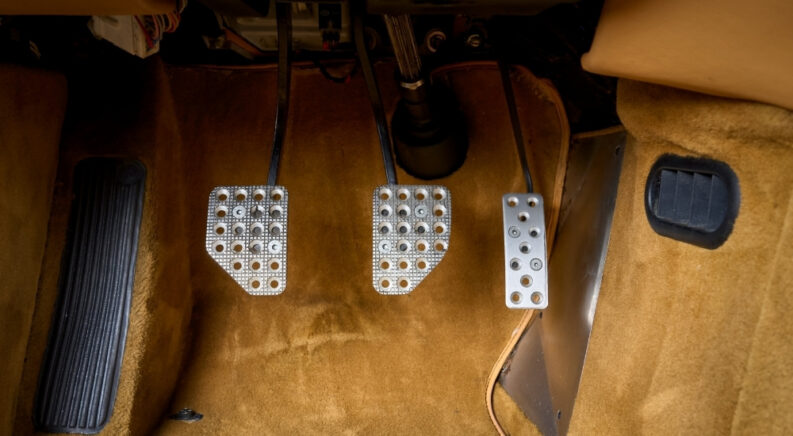
Aftermarket pedal covers are often installed to create a “sportier” aesthetic inside the car. The problem is that poorly installed pedal covers, or covers made from lesser quality materials, can often slip or shift under your foot. If a cover loosens over time, it can reduce the grip between your shoe and the pedal. In severe cases, they can even slide sideways and interfere with adjacent pedals.
Imagine needing to brake quickly, only for your foot to come off the pedal because the cover moved. Pedals are a critical point of control. Anything attached to them needs to be secure, properly sized, and made from quality materials that provide a reliable grip. If a pedal cover doesn’t lock securely into place, it doesn’t belong on the car.
Design in the Details
Modern vehicles are engineered with safety systems that work hand in hand. Airbags deploy in specific directions. Seat belts tighten at specific times. Visibility angles are carefully considered. Even the weight and positioning of certain controls are tested to the fullest to ensure everything is consistent.
When we add accessories inside the cabin, we’re often changing those conditions without realizing it. Most of the time, nothing happens, but in a crash or emergency maneuver, the smallest design change can make all the difference. This is why professional vehicle testing agencies evaluate interiors to strict standards, something most aftermarket accessories never undergo.
Interior upgrades aren’t inherently dangerous. Many accessories are perfectly safe when chosen carefully. When I consider adding something inside my vehicles, I try to ask a few simple questions first. Could this block an airbag? Could this interfere with my steering, braking, or shifting systems? Could this become a projectile in a crash? Does it block my visibility? If any of these questions bring about even the slightest “maybe,” it’s worth reconsidering. Simple upgrades like quality floor mats, properly designed phone mounts, or vehicle-specific storage solutions can improve comfort without introducing unnecessary risks.
Less Is More
Interior accessories are often marketed as small upgrades, but the interior of a vehicle is one of the most carefully engineered environments in modern transportation. The steering wheel, seat belts, pedals, and visibility lines are all designed to work together to keep the driver and their passengers safe. When we add poorly designed or poorly installed accessories, we can unintentionally disrupt those systems.
I’m not against customizing the inside of a car. In fact, as someone who spends a lot of time behind the wheel, I enjoy making a vehicle feel more personal and functional. However, I’ve learned that sometimes, those upgrades simply aren’t worth the tradeoff. Sometimes, the safest accessory for your car is the one that you choose to steer clear of entirely.