
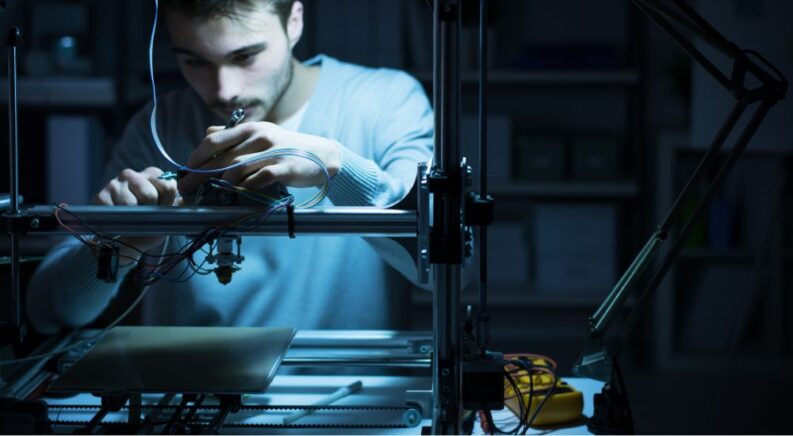
If you even casually follow the automotive technology scene, you can barely go for a day without hearing about 3D printing. Additive manufacturing, as it’s technically known, has been touted as a faster and cheaper way to produce car parts with less material waste. Major automakers worldwide, from Ford to BMW, are jumping on board.
But is 3D printing a long-term solution for producing car parts, and what’s possible with this still-developing technology? The answers are yes, and potentially a lot. As I write this, 3D printing is on its way to becoming a mainstay, with uses ranging from car repairs to motorsport prototyping. Join me for a look at what’s already happening and what might be to come.
Repairing Old Cars
Do you have an older vehicle that you want to keep running, but have difficulty finding parts? Such was the plight for decades among owners of classic muscle cars, off-road SUVs, trucks, and other prized steeds. Many car enthusiasts have been forced to gamble with aftermarket and junkyard parts or try to fabricate their own.
However, 3D printing has changed that. Car and Driver reported in late 2024 on how Jay Leno, the comedian and noted car collector, was using 3D printing for restorations and repairs. Furthermore, it had proven effective for vehicles ranging from a 1968 Pontiac Firebird Sprint to a 1907 White steam car.
Porsche is one of the most notable manufacturers embracing 3D printing. Through its Porsche Classic division, the German automaker 3D prints low-volume spare parts on demand for many vintage vehicle models. Sister marque Audi also produces spare parts using 3D printing, and Mercedes-Benz uses the technology to maintain its Daimler lineup of trucks and buses.
This is one of my favorite 3D printing possibilities. As certain cars fade from the national consciousness, it’s no longer cost-effective or practical to maintain a traditional parts line. However, thanks to 3D scanning and printing, a company or a private user can produce OEM-specification parts without expensive, time-consuming tooling or even shipping.
Hot Rods
This is somewhat in the same vein as restoration, but nonetheless something I was surprised and delighted to learn about. As Hot Rod magazine has noted, the process of car modifications got stuck in the mud during the 20th century, but the new millennium has changed everything. First came computer-aided design (CAD) software, which let designers plan a project before they start building. Then there was CNC machining, which enabled precise, repeatable aluminum production. Now, thanks to 3D printing, hot rod artistry is fully unlocked.
Many hot rod and restomod shops now have at least one 3D printer on hand. Many plastic parts, such as brackets, wheel wells, bumper covers, and interior trim, can be printed quickly, and even some metal parts, including intakes and exhaust tips. As Tyler McCormack of Reversion Raceworks noted, 3D printing has greatly expanded the possibilities of hot rod design. It also means no more compromising between how effective or cool something is and how easy it is to manufacture. Instead, creatives can focus on getting everything from each part and letting their imagination run wild.
Building and Prototyping New Cars
Will we eventually see entire cars built via 3D printing? While no automaker has yet done this, some manufacturers are incorporating 3D-printed parts at increasingly high levels. BMW and Volkswagen are the two biggest adopters among mainstream brands. In fact, BMW claims it began testing additive manufacturing techniques in 1990. Nowadays, it uses 3D printing across all its automotive brands, including MINI and BMW Motorrad, for everything from custom production parts to manufacturing tools. Another major step is coming, as in March 2026, BMW announced it will start using wire-arc 3D printing for large metal structures, which could include vehicle frames.
As for Volkswagen, it started the shift to 3D printing in 2018. Most recently, VW incorporated 3D-printed metal parts for the newest T-Roc Cabriolet sold in Europe. Even if a company doesn’t yet feel comfortable building new parts via 3D printing, additive manufacturing has its place. Manufacturers such as Ford, General Motors, and Toyota use 3D printing to create test prototypes before moving to full-scale production, helping them get vehicles to market more quickly.
Auto Racing and Performance
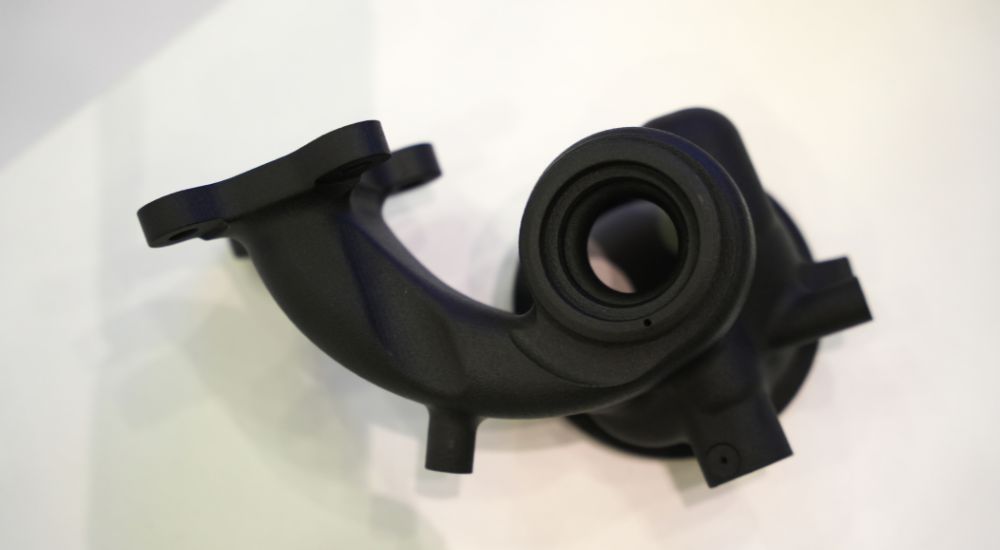
So, 3D-printed parts can work well for everyday driving and even for hot rods. But are they good enough to handle the stresses of motorsport and other extreme situations? As it turns out, yes. NASCAR Cup Series team Legacy Motor Club made waves in early 2026 by revealing that it uses 3D printers to produce not just prototypes and templates, but also functional components. One-time and non-critical parts such as grille bezels, brake nose ducts, and rocker skirts are manufactured directly via 3D printing.
The team claims that using 3D printing has saved significant time and money on car production. For example, grille bezels cost over $1,900 to purchase from an external supplier, but less than $500 to print in-house. On the other side of the pond, the F1 Scuderia Ferrari team has used 3D-printed sensor mounts to test the aerodynamic effects of front-wing updates.
Supercars and 3D Printing
Additive manufacturing is pervasive in the world of supercars and hypercars, too. When Ferrari unveiled the F80 in October 2024, it noted that 3D-printed upper wishbones were used for the suspension system. Czinger’s 21C hypercar reportedly has over 350 3D-printed parts, and Bugatti has adopted the technology for its one-off and low-volume cars.
Then there’s the 3D-printed Lamborghini. In the late 2010s, physicist Sterling Backus and his son Xander decided to create a full-size, functional Lamborghini Aventador via 3D printing. Using a 1/10-scale model, a 3D printer purchased from Amazon, and a $20,000 budget, the Backus duo produced nearly every key component. The result, unveiled in 2023, is impressive. The only place it strays significantly from the Aventador is the engine, which is a GM LS1 5.7L V8. Other non-printed components, such as the steering wheel, were donated by Lamborghini in support of the project.
Limitations of 3D Car Part Printing
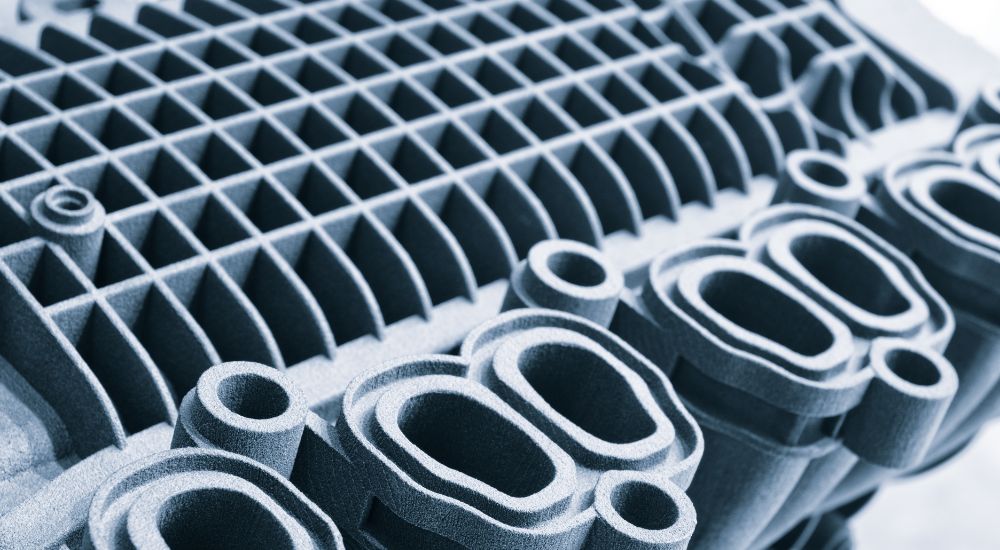
While all of that is impressive, 3D printing hasn’t yet reached the point where it can consistently produce every vehicle part. The biggest issue is that even industrial-size printers are limited in the sizes of parts they can produce, how fast they can produce them, and the materials they can use. This is especially true of safety-critical parts. Advanced materials are required to meet federal standards for durability, heat resistance, and other performance criteria. As such, these parts are slow and expensive to manufacture on the world’s best 3D printers, let alone on a home or office model.
While actual part production might be cheaper, there’s a matter of start-up costs. When VW went full song on 3D printing, the HP MetalJet 3D printers it chose reportedly cost over $400,000 each. Even when praising 3D hot-rod printing, Tyler McCormack noted that it still often costs more than traditional manufacturing methods.
The Future of Car Parts
Nevertheless, with 3D printing sure to advance and evolve over the coming years, it’s exciting to think about the possibilities. This is one of the technologies I think is already living up to the hype, being more than just a cool sideshow and genuinely capable of reimaging the automotive world. At a user level, 3D printing can already be a great way to help you restore a first-generation Ford Mustang, add cool accessories to a street rod, or replace broken trim and interior parts on your daily driver. Automakers are pushing the envelope, and I think the day is coming when people will be able to download a template and print their own car.