
Most drivers are familiar with basic tire maintenance tasks, such as regularly checking tire pressure and replacing worn-out tires once they fail the old “upside-down penny test” for tread depth. These are both important, but they represent the bare minimum when it comes to care. If you really want to get the most out of your tires and wheels, crucial tasks like tire rotation, wheel alignment, and tire balancing should never be treated as an afterthought.
Tire balancing is particularly important, affordable, and can easily be completed right at home for a lot less than you might think. If you’re looking to enjoy a smoother driving experience, improved efficiency, and a safer ride, it’s time to get things in balance. Join us as we take a closer look at the tire-balancing process, share a few common symptoms of an unbalanced vehicle, and discuss the benefits of proper balance.
What Is Tire Balancing?
It might sound like a complicated procedure, but tire balancing is a pretty easy concept to wrap your mind around. The process simply involves attaching small adhesive metal weights to the rim of a vehicle’s tire and wheel assembly to ensure the assembly is properly balanced and rotates smoothly across a wide range of speeds. These weights help ensure there are no heavy spots that could cause a wobble or vibration.
How do these heavy spots occur in the first place? Our wheels and tires take plenty of damage as they roll down the road. Potholes, curbs, and debris can lead to dents in the wheel, while normal tread wear, new tires, patches, and plugs can throw off the weight distribution.
Experts generally advise balancing your tires every 5,000 to 7,500 miles, or when you start to notice vibrations, odd noises, or other common symptoms we’ll discuss below. In truth, even a new set of wheels and tires isn’t usually perfectly balanced right out of the box. Different tire designs, wheel castings, valve stems, and other components can create slight variations in weight, which only become more noticeable as the speedometer climbs.

Common Signs Of Unbalanced Tires
There are plenty of ways to tell if your tires are overdue for a bit of balancing. While some are rather obvious, others require a keen eye, attention to detail, and a little data tracking. Let’s walk through some of the most common signs of tire imbalance and learn how to spot potential issues before they become bigger problems.
Uneven Tire Wear
This is usually one of the first signs of improperly balanced tires, and also one of the most visible. An unbalanced tire causes one part of the rubber to experience increased pressure, causing accelerated wear, flat spots, scalloped/feathered edges, and more. This sort of wear can lead to inconsistent performance and a dangerous loss of traction, and should never be ignored.
Vibrations
When equipped with a properly balanced set of wheels, your car, truck, or SUV should deliver a smooth, consistent driving experience. If, on the other hand, you’ve noticed unusual vibrations in the steering wheel, seat, or floor, you could be dealing with a balance issue.
Uneven weight distribution can cause the steering wheel to vibrate, especially at highway speeds, and even send shudders through your seats and floor. These vibrations aren’t just a nuisance. They can cause long-term damage to important suspension components such as shocks, struts, and bearings.
Pulling To One Side
Have you noticed your vehicle drifting to one side when you’re cruising down the road? There are plenty of issues that can cause this sensation, including improperly inflated and misaligned wheels. Unbalanced tires are another common culprit. A slight imbalance can have a big impact on how the tires roll over the asphalt and can easily affect automotive safety.
Strange Noises
While (most) vehicles can’t speak, they’re still worth listening to. Certain audio cues can help to clue drivers in on a potential problem, whether it be a squeak, rattle, or sudden backfire. Have you heard a thumping sound from your tires, or increased road noise at high speeds? It could be traced back to imbalanced tires.
Uneven weight distribution causes the tires to hit the road unevenly, leading to a noticeable thump that could eventually damage your entire suspension. A noticeable increase in road noise—that consistent drone that you often hear when headed down the highway—can also be a warning sign, which is why it’s so important to keep your ear to the ground.
Poor Fuel Economy
There are multiple ways that a set of imbalanced tires can impact efficiency. From energy loss caused by constant vibrations and uneven tire contact with the road to accelerated tire wear and additional drivetrain effort, imbalanced wheels can lead to up to a 3% reduction in fuel economy. This might not sound too drastic, but even a few MPG can add up over the course of a vehicle’s service life.
Is D.I.Y. a Good Idea?
Tire balancing is relatively affordable compared to other common automotive maintenance tasks, typically costing drivers between $15 and $30 per tire. That said, there’s always the do-it-yourself approach. Tire balancing isn’t the most complex project you’ll encounter, and can usually be performed from the comfort of your own garage with a little research and a modest investment.
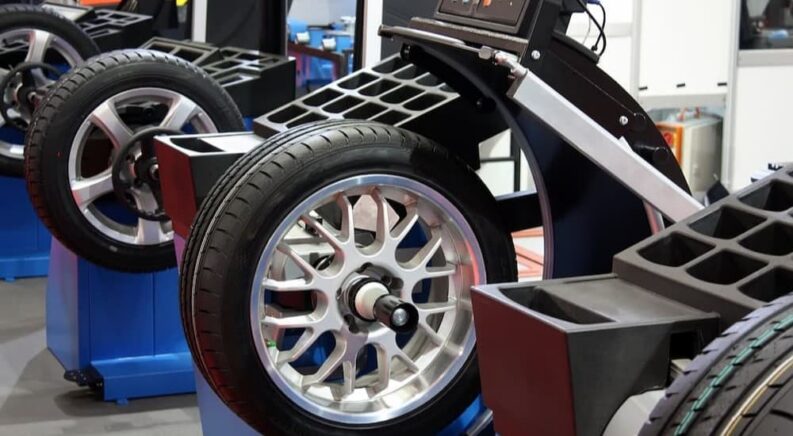
While auto shops and dealerships employ a professional-grade dynamic balancing machine that retails for at least $1,000, mechanically inclined drivers can source a full D.I.Y. setup for as little as $120. Most of this cost comes down to what’s known as a bubble balancer, which is basically a low-tech version of the dynamic balancing machine you’d find at your local mechanic.
Before you launch into any tire balancing project, it’s important to give your wheels a good once-over. If your tires show visible signs of sidewall damage or are nearing the end of their service life, balancing might not be worth the effort, since tires and wheels are typically balanced as a single assembly. Once you’ve ensured there’s no serious damage, give your wheel a deep clean. Dirt can throw off the balance and make it harder to attach the adhesive weights used to balance the wheels.
Next, it’s time to break out the bubble balancer. This is a relatively simple piece of equipment that looks like a large vertical spindle mounted on a heavy base. While plenty of less-than-reputable websites will happily sell you a $40 bubble balancer, it’s usually worth springing for a mid-tier product in the $100 range. Poorly machined parts can easily throw off the wheel’s balance, leading to inaccurate readings, durability issues, and potentially uneven tire wear.
The eponymous “bubble” is basically just the 3D version of a traditional carpenter’s level. Instead of moving back and forth along a bar, a bubble balancer employs a circular bull’s-eye level to ensure the wheel’s center of mass is directly over the spindle.
Place the wheel/tire assembly on the bubble balancer, give it a gentle spin, and then observe the position of the bubble in the balancer’s sight glass. If the bubble gravitates towards one side of the circular housing, you’re dealing with an imbalanced tire. To address this, simply rotate the tire until the bubble is at its highest point. That’s the lightest spot on the tire, and the one most in need of a little extra weight.
Try adding different weights at different positions, starting small and working your way up until the bubble remains centered when the tire is rotated. Once you’ve dialed in a decent balance, spin the wheel in both directions, remount your wheels, and take it for a test drive. If you still notice some strange vibrations coming through the steering wheel or seat, or if something just feels off, it’s back to square one. Otherwise, you’re ready to hit the open road.
Finding a Good Balance
Tire balancing might seem like a relatively minor maintenance task, but it can have a huge impact on the overall driving experience, leading to shaky steering, worn-out tires, compromised efficiency, and dangerous distractions. A properly balanced set of tires will not only ensure a smooth ride but is also one of the easiest ways to maximize the service life of your tires, shocks, struts, and other expensive parts.
It’s easy to avoid these common worst-case scenarios, but you still need to know what to look out for. A new noise or vibration might initially catch your attention, but it can quickly fade into the background and seem like the status quo after a short while. That’s why it’s important to address these issues quickly, whether you take the D.I.Y. approach, rely on a local auto shop, or have the dealership handle all your repairs.