
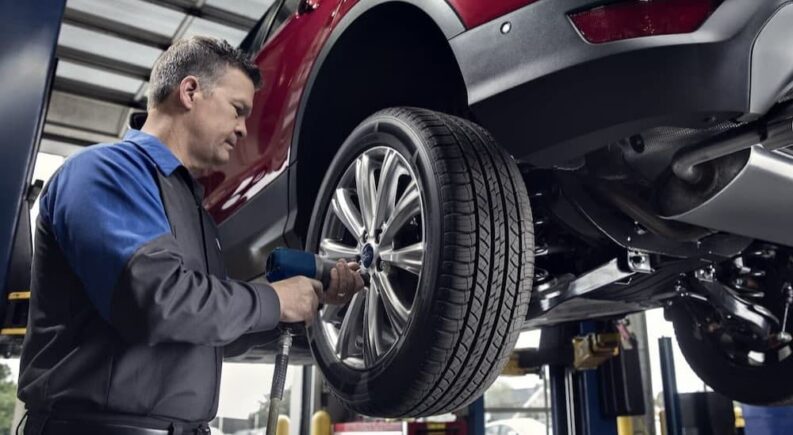
There are few trends more frustrating than so-called “shrinkflation.” While pure inflation, the gradual decrease in purchasing power, is a necessary evil in a healthy economy, shrinkflation is more of a money-making scheme that serves little purpose aside from padding a manufacturer’s profit margins.
For those who have been lucky enough to avoid the experience, here’s a quick primer. Shrinkflation is a strategy by which businesses reduce the size, weight, quantity, or features of a product without reducing the sticker price. Simply put, you’re paying the same amount, but ultimately getting less for your money.
The term dates back to the global financial crisis of 2008, but has been rising sharply over the last few years. In fact, between 2021 and 2023, products have been downsized at a 3-to-1 rate compared to products that have grown in size. The difference has been especially noticeable at the grocery store, with consumers paying 20% more for cereal and candy, and shouldering a 32% increase in average coffee prices.
The trend hasn’t been limited to the food and beverage industry. Consumer electronics have been hit by a distinct form of feature-based shrinkflation, in which some once-common accessories have morphed into optional add-ons. The smartphone is a prime example. While the average Apple or Android product was once packed with a charging brick and headphones, both features are now increasingly rare.
It’s a similar story in the auto industry, where everything from floor mats and engine covers to backup key fobs has become a pricey aftermarket purchase. While having to shell out for such features is frustrating, it’s the disappearance of the spare tire that really catches many drivers off guard.
Once a staple of every new car, truck, and SUV, the spare tire has basically gone extinct over the last few decades. A recent Consumer Reports study found that only 10% of new vehicles are equipped with a full-sized spare, while less than half are sold with a temporary compact spare tire. The humble spare has been steadily replaced by a plug kit in 34% of vehicles. While 7% of vehicles feature run-flat tires, around 4% of modern vehicles offer no solution for a sudden blowout or puncture.
Is this another example of shrinkflation, an eco-conscious move by automakers, or just a sign of a mechanically illiterate driving public? Let’s dive into the disappearance of the spare tire, consider a few alternatives, and learn which models are still packing a donut in this day and age.
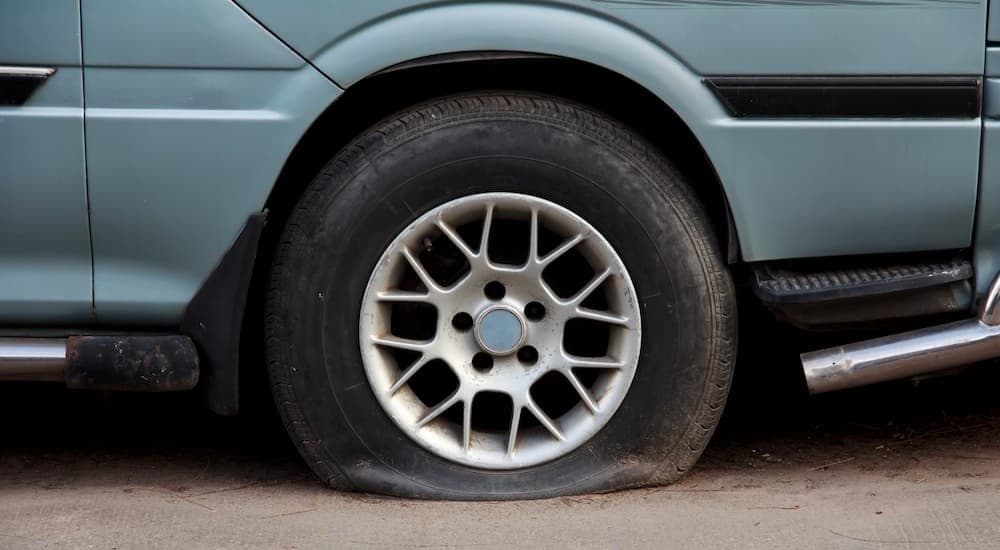
How Did We Get Here?
There are several factors driving the disappearance of the spare tire. This includes the usual, profit-driven culprits, but the decision to largely discontinue the spare tire can also be traced to some regulatory and packaging factors, as well as changing consumer behavior.
Cost
A spare tire might seem like an odd thing to cheap out on, but many drivers don’t understand the true cost behind the feature. A full-size spare can run anywhere from $150 to $300, depending on the vehicle, while a compact spare (or “donut”) usually runs between $50 and $150.
While a full-size spare serves as a one-for-one replacement for your current tire, a compact spare is designed to be a temporary stopgap until you can reach your nearest service station. These compact spares are not designed to be driven at speeds exceeding 50 mph, and are generally designed to travel less than 50 miles in total.
A spare represents a relatively small chunk of change compared to the MSRP of a new vehicle, which exceeded $51,000 in 2026. But a spare tire also requires a number of add-ons that can quickly add hundreds of bucks to the bottom line. Jacks, lug wrenches, mounting hardware, and the spare tire storage tray might not be very expensive, but they’re not free, either.
Design
Today’s vehicles are packed with more cutting-edge tech than ever. Advanced safety features, emissions-reducing components, electronic control modules, and sound insulation all occupy valuable real estate.
The issue is exacerbated by today’s hybrid and EV models. These electrically powered models pack large batteries that can quickly reduce cargo space, which has become an increasingly important factor for modern drivers. Features like lower load floors, fold-flat rear seats, and third-row seating also play a role by leaving little room for the traditional spare tire. Cargo space can be a make-or-break factor when deciding between two models, and nixing the spare is often seen as a small sacrifice.
Weight and Efficiency
Every pound matters when you’re trying to meet increasingly strict emissions regulations. A spare tire can weigh 35 to 50 lbs for a small car, or more than 60 lbs for a full-size truck or SUV. Again, that might not seem terribly important in a vehicle that weighs 6,000 lbs, but every pound affects efficiency.
Automakers are always looking for ways to game the federally mandated Corporate Average Fuel Economy (CAFE) standards. While removing the spare might only improve average fuel economy by less than one MPG, that could mean the difference between a passing grade and a failing mark.
A lighter vehicle can also provide a more enjoyable, responsive driving experience, especially in acceleration, handling, and braking. In the world of EVs and hybrids, shedding a few pounds can also noticeably affect total driving range.
Customer Habits
Finally, there are the changing consumer habits and preferences. While many drivers were once adept at changing a busted tire with a spare, the skill has become increasingly rare over the years. A recent AAA survey found that nearly 20% of U.S. drivers don’t know how to change a flat tire, while less than 50% said that they could complete the task without assistance.
This raises a simple question. In a world where few drivers know the finer point of a lug wrench, what’s the point of including a spare? Even those who know their way around a donut tend to call in the pros, with nearly 1/4 of drivers relying on roadside assistance services when they pop a tire. This could be simply for convenience, or because the shop that put the wheel on jammed the lug nuts so tight they won’t budge with a simple lug wrench. Factor in the added cost and impact on efficiency, and it becomes a little harder to make the case for a spare.
What Vehicles Have Them?
The stats certainly underscore what drivers have been learning over the last few years. According to data from Cars.com, more than 200 models across 39 brands don’t offer a spare tire. This is especially true of EV and hybrid models, as well as luxury brands like Mercedes-Benz. The German automaker is a bit notorious for its spare-tire policy, with the majority of the lineup lacking a spare. Instead, the company opts to include plug kits or to build its vehicles around run-flat tires designed to safely limp to the nearest service station after a puncture.
If you’re still expecting a spare tire with the purchase of your new vehicle, there are still plenty of popular options to choose from. In fact, many of the market’s most popular models include a standard spare tire. This includes the country’s bestselling vehicles in the Ford F-150 and Toyota RAV4, as well as other high-volume vehicles like:
- Chevy Silverado/GMC Sierra
- Honda CR-V
- Ram 1500
- Toyota Camry
- Nissan Rogue
- Honda Civic
Larger commercial models like the Ford E-Series, Super Duty, and Transit with dual rear wheels still feature a traditional spare. So do many off-road-focused trims. Subaru has long been known for producing a unique lineup of off-road-ready models, such as the Outback and Forester, thanks to the brand’s Symmetrical All-Wheel Drive (AWD) system. A new generation of off-road-ready Wilderness trims takes that reputation to the next level. These new trims are equipped with full-size spare tires that help drivers keep their off-road adventure on track and are generally considered a must-have accessory when venturing off the beaten path.
Spare Tires vs Plug Kits
Tire plug/repair kits, also known as Tire Mobility Kits (TMK), have steadily replaced the spare tire. These kits typically consist of a bottle of tire sealant, a small air compressor, hoses, connectors, and a power cord that runs the compressor directly from your vehicle’s 12-volt outlet.
This can provide drivers with a quick, easy way to get back on the road and seek further assistance, but are they up to the task? Hyundai would suggest as much, characterizing TMKs as “an effective and user-friendly temporary fix for tread punctures, often saving the driver significant time and physical effort compared to manually swapping an entire tire/wheel assembly,” in that same Cars.com article.
They also have plenty of limitations. A TMK is perfectly adequate for small punctures limited to the tire’s tread, but it’s much less effective for larger punctures. Sidewall cuts and punctures, blowouts, and large holes are all well beyond the purview of a TMK, as are tires that have come completely off the wheel.
Should you invest in a full-size/compact spare, or rely on the TMK that came with your new vehicle? It all comes down to how and where you use your vehicle. Drivers might be able to get away with a TMK if their typical journey involves driving on paved roads near urban centers, where roadside assistance and consistent cell coverage are rarely concerns. A TMK might also make sense for those who put a premium on cargo space.
However, they’re not the right choice for every application. If you regularly venture into off-road environments or spend long hours behind the wheel in challenging weather conditions, you might want to consider investing in a full-size or compact spare. Most commercial vehicles still have a spare for a simple reason. Changing a tire yourself is the fastest and most reliable way to get back on the road, wherever you are.
There’s one other option that deserves a quick mention, largely as a warning. While popular “fix-a-flat” products make all sorts of lofty promises about their plug-and-play appeal, these tire sealant kits are limited in terms of their effectiveness and long-term impact. Fix-a-flat products are designed only to address small punctures. The sealant can interfere with permanent repair if improperly applied. It can also damage tire pressure monitoring system sensors, and does not work effectively at temperatures below freezing.
Remember, a TMK can’t handle severe damage and needs to be followed up immediately with a trip to your local auto shop or dealership, where you can purchase a new tire or pay for a professional repair. Even full-size/compact spares typically require a quick service visit, during which technicians can ensure the damaged tire is replaced or the wheel is properly tightened to the correct torque specifications.
Whether you want to call it shrinkflation, attribute it to cost-cutting, or blame it on changing consumer habits, one thing is for sure. The spare tire is clearly on the way out. If you prefer the old-school approach and are comfortable with the basics of tire replacement, there are plenty of popular new vehicles with full-size and compact spares to choose from. If you value cargo space, efficiency, and don’t see yourself squatting next to four lanes of traffic to change a tire, a simple TMK provides a quick and easy, if temporary, fix to puncture problems.